Pagan Idol: rate your favorite gods

Godchecker not only has tons of great information about deities from around the world written in a informative and humorous style, but it also features a Deity of the Day.

Here’s a sample from the Chinese god, Monkey:

From the beginning of time, a certain rock on the Mountain of Fruit and Flowers had been soaking up the goodness of nature and QI energy. One day this pregnant rock released a stone egg, and from it hatched a Stone Ape, who solemnly bowed to the Four Corners of the Earth — then jumped off to have fun.

This was MONKEY. He was high-spirited, egotistical and full of mischievous pranks. He was soon having a wonderful time as King of the Apes. But a niggling worry began to gnaw at him — one which would change his life. The Monkey King feared Death.

There are also essays, some theory and they just added a section for Christian Saints. Not only a useful reference for catching up on your mythology, but an entertaining one.

Use Body Position To Remember

i-9ec96d02dd10ac4930e7fd82e80cc364-dijkstra1
Cognitive Daily has an interesting article on the connection between body position and memory. There was a study that proves that being in a matching body position to the one you were in the memory helps you to remember. In other words, if you are trying to remember something that happened while you were tying your shoes, you should lean over and tie your shoes while you try and remember. According the study, you’ll remember it more quickly and in more detail.

The conclusion is this:

Dijkstra’s team believes that the effect may be due to the way memories are stored in the brain: one theory of memory suggests that memories are composed of linked sensory fragments — odors, sights, sounds, and even body positions. Simply activating one or more of those fragments makes the entire memory more likely to be retrieved. In any case, if you’re trying to recall a particular incident in your life, putting your body in the right position might help you remember it faster and more accurately. The key appears to be your body position when the memory occurred. So if you’re trying to remember, say, the 1993 World Series, unless you were at the game, the way to access that memory would probably be to sit on your living room sofa holding a cold beer.

Use this to your advantage when you are creating. If the ideas aren’t coming, change your position. Posing or moving a particular way will set off a whole other series of memories and experiences. Too often we create while in the same position, for instance leaning over a computer keyboard. According to this study, this would only help you to remember other times you were trying to create, not other events or emotions in your life.

Click here for article

Own Your Own Rocket Belt!

Screen Shot 2017-08-20 at 11.37.00 AMThere are a few bits of technology that have represented the future since the 50s. The flying car, a robot maid and the rocket belt. Well, thanks to Tecnologia Aerospcial Mexicana you can now buy your own Rocket Belt!

The price might hold you back, $250,000, but if enough rich people buy them, the price will come down as they go into mass production. Only then will the future we have been promised come into being.

Here’s what you get for your money:

1. A fully-tested, custom-made flying rocket belt
2. This belt has been proved to be the most stable design and easier to fly
3. A special machine to make our own unlimited supply of rocket fuel
4. Hands-on training in the process and the equipment
5. Flight training of 10 flights in your own rocket belt
6. Maintenance and setup training
7. 24/7 expert support
8. Housing and food are included during training

They have a warning about using a machine from another company:

Be aware of people that offer plans, parts or a rocket belt that has not flown and tested because you will be killed.
The Rocket Belt is NOT a machine that you can make and fly easily, if someone offers to you plans or parts to make a “cheap” Rocket Belt ask for a demonstration and see an actual flight, don’t be the test pilot of a deadly machine.

All I know is that it’s pretty and shiny and I could jump over the building where I live with a single bound. Plenty of tempting video and picture galleries on their site.

Rocket Belt Site

Creativity tip: think like a squirrel

Screen Shot 2017-08-18 at 7.48.57 PMIn his book Overachievement John Eliot discusses how to get into a Trusting Mindset (A mindset of accomplishment) by thinking like a squirrel. He also defines an opposing method of thought called the Training Mindset. This is how we think when practicing to do something. The process of learning and getting better is a completely different mindset than actually doing something.

In the Training Mindset, you second-guess what you do. You think about it while you are doing it and evaluate every move to see if you can make it better. While practicing you should be analytical and critical, but are those helpful when you are actually doing something? How do you get into that Trusting Mindset that lets you just use what you’ve learned without over-thinking the process? In the book, Eliot states that a lot of mediocre achievers never get beyond this Training Mindset.

He uses squirrels to make his point about Trusting Mindset. Squirrels, he points out, don’t really think, they just react to their surroundings. When a squirrel is presented with a telephone wire to cross, it doesn’t consider how windy it is or how high the wire is off the ground, it just scrambles across. People get nervous and start think about falling and calculating how fast they should move to maximize safety as they make their way across the wire.

Another example of Trusting Mindset is tossing a set of car keys to someone. It’s an easy task, you can do it without thinking. Suppose someone told you that you could get a million dollars for successfully tossing them a set of keys. Would raising the stakes change your process? Would you be able to do it? Would it decrease your chances? It would flip you instantly into Training Mindset.

Here are some adjectives Eliot uses to describe a Trusting Mindset: Accepting, Instinctive, Playful, Letting it Happen.

He also says, “The Trusting Mindset is what you were in before you knew any better.”

To use the Trusting Mindset, he advises “practice, practice, practice” and that you should come to accept and enjoy the pressure that comes with creating something. Expect the fear and reservations that come when you are starting something new and let them become part of the experience while you focus your abilities and remain confident. Don’t not do something because you are worried about failure. In other words, there is no secret except knowing how you always feel before you begin and letting go of those emotions while you are creating.

Once you start creating, become that squirrel, unconsciously using every ability you have to get across that wire without fear or stopping to consider the consequences.

Be a squirrel.

Link to book.

Art As Self-Expression: Dangerous to Creativity?

Keith Johnstone from his book Impro. I highly recommend it.

Once we believe that art is self-expression, then the individual can be criticized not only for his skill or lack of skill, but simply for being what he is.

Schiller wrote of a ‘watcher at the gates of the mind’, who examines ideas too closely. He said that in the case of the creative mind ‘the intellect has withdrawn its watcher from the gates, and the ideas rush in pell-mell, and only then does it review and inspect the multitude.’ He said that uncreative people ‘are ashamed of the momentary passing madness which is found in all real creators… regarded in isolation, an idea may be quite insignificant, and venturesome in the extreme, but it may acquire importance from an idea that follows it; perhaps in collation with other ideas which seem equally absurd, it may be capable of furnishing a very serviceable link.’

My teachers had the opposite theory. They wanted me to reject and discriminate, believing that the best artist was the one who made the most elegant choices. They analyzed poems to show how difficult ‘real’ writing was, and they taught that I should always know where the writing was taking me, and that I should search for better and better ideas. They spoke as if an image like ‘the multitudinous seas incarnadine’ could have been worked out like the clue to a crossword puzzle. Their idea of the ‘correct’ choice was the one anyone would have made if he had thought about it long enough.

I now feel that imagining should be as effortless as perceiving.

What should I say? – Help with writer’s block

The actual use for What Should I Say is for you to post situations where you don’t know what to say or help other people come up with what you think they should say. You know, it’s like having a group of friends giving you bad advice.

The next time you’re stuck while you’re writing, type the situation into this site, sit back and wait for the bad advice to start flowing in. Bad advice is great advice for characters. It means they’ll do the wrong thing and you’ll have plenty of drama.

Here’s one piece of advice:

What do a say to a friend who consistently breaks her promises? These promises are mostly things she offers to do, not things I request of her.

I would say, sort of poke fun at it next time she makes a similar promise. Like “Oh really!” or “yeah, sure”. Be sure to do it in the most playful, least offensive and least confrontational way. “Can i expect that by next year?” Something along those lines, I guess. Joke about it, that way it communicates your position on it in the least hurtful way. She’ll get the idea.

Great advice! Passive aggression always works in situations like that. It lets you raise the tension of the situation without actually dealing with it. Usually, you get three or four different pieces of advice, so you might get a character option you haven’t thought of yet.

If you are feeling kind, go give advice to the kids in the romance section. They need to know how to tell a girl that you like her…

Link to site

Creativity tip: select a theme song

Screen Shot 2017-08-20 at 1.24.43 PM

One of the hardest parts of working on project is getting started. Writing the first page of a novel is difficult enough, but every single time you sit down to work on it you have to start all over again. Long term projects require you to maintain the same creative urge for months or years at a time. You have to create a signal to you brain that it needs to enter a creative state.

My favorite way to do this is to pick a theme song for every project. Just like the opening credits to a TV show, play the same music every time you start your project. As you create more and more, your creative state will get linked to the music and you’ll be able to get into the groove instantly.

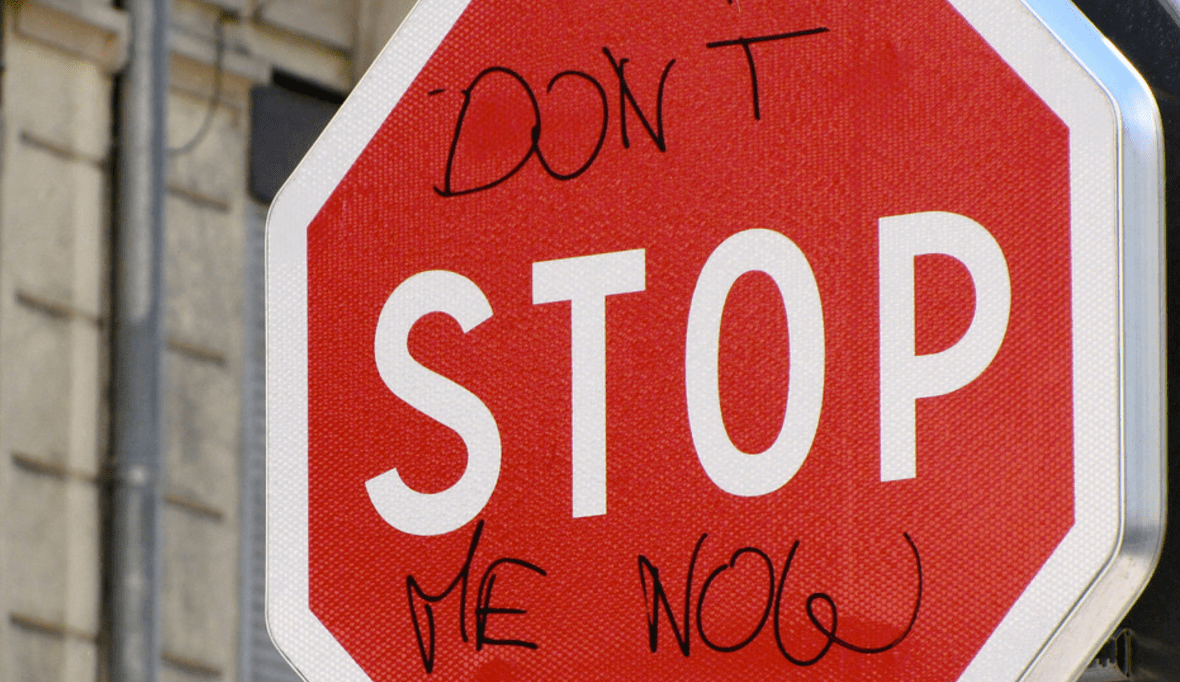
The best songs to use are the more simple or corny songs with positive lyrics. Don’t use something that makes you think or already has some emotional connection for you.  Don’t Stop Me Now, by Queen, is one that I use all the time. I know people who use the theme from Rocky and Funkytown.

Different music can be used while you are creating to help you enter different emotional states or to help you zone out. This tip is just to help you take that first step, if you can’t do that then nothing else matters.

Creator blog: Rudy Rucker

Rudy Rucker is my favorite science fiction writer. His novels not only reflect his intelligence and knowledge of math, but also his vast sense of humor. He’s a math professor turned writer and he can describe the most abstract mathematical subjects in incredibly poetic ways.

He keeps a blog where he posts his thoughts while working out his novels. For his latest novel, he’s trying to figure out a limitation on teleportation. He wants a reason that only humans can teleport and not creatures from other planets. His thought is that it’s perhaps because teleportation is dependent on regret, doubt and fear. There is discussion about it, others suggest he should use more positive emotions, and he justifies his choice this way:

Regret involves imagining alternate pasts (like one where I attended or worked at Stanford!) If you want to flip this to a positive emotion, you might think of gratitude that things came out the way they did instead of in some other way. Like the gratitude you might have over that you were able to raise your children fairly well. You might even speak of this as pride, like a quiet pride in a job well done. But pride easily curdles into a negative, after all it’s a Deadly Sin.

Doubt involves imagining alternate present times and locations. In doubt, you wonder if everything you believe is wrong and the world is different than you imagined. Flipping to a positive, we could speak of humans have curiosity or adventurousness or enterprise.

Fear involves imagining bad alternate futures. Hope and yearning and longing are about positive futures. This said, yearning can be a negative in that it saps your appreciation of the present.

I also recommend his manifesto for transrealism. Reading a good manifesto can really charge your imagination and I love his writing style.

Read his blog here

Irish Cursing Dictionary: In Honor Of St. Patrick

Here’s a user-run Irish cursing vocabulary list. Be forewarned, there is a lot of harsh language.

Acting the Maggot

Not Behaving in a Serious Manner
from Stepo

“Lads, I’ll break your faces if ye don’t stop acting the c*nting maggots, you little f*ckin’ arsehole c*nts.”


Irish Slang

I’m not a nerd, he’s a nerd: slang for nerd status

I’ve been reading Talk The Talk: The Slang of 65 American Subcultures, which anyone interested in language should own. It’s a glossary, divided by group, of the inside talk used by people who participate in certain activities. There’s a lot of revealing information in the book. In particular, I’m interested in the use of slang to define the status within groups that are looked down upon.

Take a look at the historical reenactor section. Unlike the stamp collectors, they have words dividing themselves up into people who are too serious, just the right amount of serious or not serious enough. In their eyes it’s the people who are too serious that people outside the group are making fun of and rightly so. The book lists three terms for those people “button pissers”, “thread counters” and “soap eaters”.

Continue reading