1938 documentary on the making of Snow White. A great look into the studios, supplies and methods that were state of the art when the art was still new. The best bit for me is recording the sound effects.
Managing talented, smart people
Did you ever read something, have it stick in your head and then not remember where you read it?
Well, it happened with me and this essay called, How To Manage Smart People by Scott Berkun. I read it years ago and quoted it to lots of people, but couldn’t remember the source. Then, a friend who knew I was looking for it, emailed me a link. Now, I pass it on to you.
It’s full of great advice about managing people who are smart and talented, but it had one question that stuck in my head. It suggests that the best question to ask your brilliant talented employee was, “What do you need from me in order to kick ass?”
For most of us, in our creative lives, we are our own managers. We decide how we work and where and what we work on. Have you ever asked yourself, what do I need from me to kick ass? Then seriously tried to answer it?
It might be something simple like easily accessible caffeine or more time alone. Or, it could be more complicated and emotional. In any case, it’s one way to help yourself live up to your creative potential. And, if you manage creative people, a great question to ask them as well.
What do I need from me to kick ass?
Break writer’s block with translation
In college I had a professor who told us one of his favorite ways to get past writer’s block was to translate a poem into English from a language you don’t know. In fact, to do this correctly, you should choose a language you know nothing about. Most people recognize too many Spanish and French words for this to work well.
Instead of looking for the meanings of the words, treat the poem like an object. Look to the shape of the poem and the length of the lines. If you can sound out words, use the sound to help you. If it character writing, look to the shapes and guess the meaning. Look for patterns in the writing and repetition.
Treat it as a real translation. The first time through you should get a rough approximation of the poem. Then, once you have a feel for your “translation,” smooth the language and amplify the meaning. Choose appropriate vocabulary. Read it to yourself.
Once you’re done, you’ll have a completely original work. The professor said that he had several published poems that were actually “translations” from great poets. Don’t read any actual translations until you’re completely finished, but do read a translation just in case you are too close.
Crazy and creativity: is there a connection?
Do you have to be mentally ill to be creative?
Psychology Today doesn’t think so. This article points out that most people think coming up with the idea the hard part, but truly creative people know that’s not true.
So what does matter?
Persistence. Hard work. Trial and Error. Skill. The ability to tell a good idea from a bad idea.
Here are a couple of quotes from the article:
Psychologist Mihaly Csikszentmihalyi, best known for his work on flow, has spent four decades studying the creative process. He recounts the experience of sculptor Nina Holton. “Tell anybody you’re a sculptor and they’ll say, ‘Oh, how exciting, how wonderful,'” Holton told him. Her response to such comments: “What’s so wonderful?” Then she explains that being a sculptor is “like being a mason or a carpenter half the time.” She finds that “they don’t wish to hear that because they really only imagine the first part, the exciting part. But, as Khruschev once said, that doesn’t fry pancakes, you see. That germ of an idea does not make a sculpture that stands up. So the next stage is the hard work. Can you really translate it into a piece of sculpture?”
And this delicious nugget:
“If the writer doesn’t sit at the computer every day,” he points out. “The muse is not going to visit.”
Make the world amazing for someone else
Today, exercise your power of creativity to influence the world. Make the world amazing for someone. It doesn’t matter if you know them or not or if you see the outcome of what you do. Give them a story they can tell their friends that has no easy answer.
Hide a $20 bill in a library book about working your way out of debt. Set up a diorama of tiny plastic animals outside a stranger’s front door. Call a random number from the phone book and tell whoever answers that they are fantastic and that everything is going to turn out alright. Put a copy of Mad Magazine inside a Wall Street Journal. Make a poster that looks like a lost pet poster that says, “This Cat Is Safe At Home – If You See Him, Get Out Of My House – $50 Reward.” Invent a new catch phrase and spend all day trying to get other people to say it. Ask them to page Tom Hanks at the supermarket and when they ask you if it’s “the Tom Hanks” tell them it is.
Do anything you can think of that will make someone pause for a moment and consider how strange and wonderful the world can be.
What are people talking about right now?
Need a topic to write about or random thoughts to get your brain working? Why not ride the wave of the fickle attention of the American public? Here are couple of ways to get access to what people are thinking about and talking about right now!
Google hot trends gives a constantly updated list of what people are searching for on Google. For instance, today people are searching for “On Golden Pond”, “Juanita Bynum” and “High School Musical 2 dance along.” Just combining those three things could provide you with a wonderful plot to a short story. Or a show on the Disney Channel about growing old and spousal abuse.
You could also check out what people are dreaming about. Dreamjournal has a number of interesting ways to view the symbols and plots of a large sample of dreamers. Here is a bunch of charts to show you what dreams are popular right now.
In any case, if you aren’t getting anywhere with what’s in your own head, try using what’s going on in everyone else’s.
William S Burroughs writing tools
 William Burroughs, author of Naked Lunch, famously used mechanical means to spark his creativity. He and Bryon Gysin were the first to use the “cut up” method in literature. They had various methods for cutting up pages of text and rearranging them to create something new. They by taking the text apart and reassembling it randomly, you could reveal the real meaning behind it and create associations you would have never come up with. Languageisavirus has a tremendous number of these methods automated and available for you to experiment with.
Burroughs and Gysin also experimented with a flickering Dreamachine that sparked hallucinations in some and seizures in other. It has worked for me, try to see if you find it useful. Don’t use it if you are prone to photosensitive epilepsy.
Allen Ginsberg’s mind writing slogans
In MInd Writing Slogans, Allen Ginsberg selected and arranged a series of quotes and presented them as a guide to perception and creation. They are posted all over the internet, so I won’t re-post all of them, but the first series on primary perception (22 out of 84) really struck a chord with me today. The two that keep pinging around in my head are “notice what you notice” and “if we don’t show anyone, we’re free to write anything.”
- “First Thought, Best Thought” — Chogyam Trungpa, Rinpoche
- “Take a friendly attitude toward your thoughts.” — Chogyam Trungpa, Rinpoche
- “The Mind must be loose.” — John Adams
- “One perception must immediately and directly lead to a further perception.” — Charles Olson, “Projective Verse”
- “My writing is a picture of the mind moving.” — Philip Whalen
- Surprise Mind — Allen Ginsberg
- “The old pond, a frog jumps in, Kerplunk!” — Basho
- “Magic is the total delight (appreciation) of chance.” — Chogyam Trungpa, Rinpoche
- “Do I contradict myself? Very well, then I contradict myself. I am large. I contain multitudes.” –– Walt Whitman
- “…What quality went to form a man of achievement, especially in literature? … Negative capability, that is, when a man is capable of being in uncertainties, mysteries, doubts, without any irritable reaching after fact & reason.” — John Keats
- “Form is never more than an extension ofcontent. — Robert Creeley to Charles Olson
- “Form follows function.” — Frank Lloyd Wright*
- Ordinary Mind includes eternal perceptions. — A. G.
- “Nothing is better for being Eternal
- Nor so white as the white that dies of a day.” — Louis Zukofsky
- Notice what you notice. — A. G.
- Catch yourself thinking. — A. G.
- Observe what’s vivid. — A. G.
- Vividness is self-selecting. — A. G.
- “Spots of Time” — William Wordsworth
- If we don’t show anyone we’re free to write anything. –– A. G.
- “My mind is open to itself.” — Gelek Rinpoche
- “Each on his bed spoke to himself alone, making no sound.” — Charles Reznikoff
10 Ways To Prevent Writer’s Block
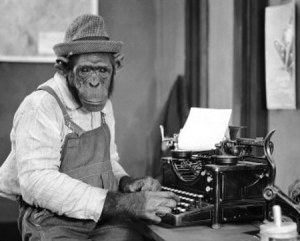
Everyone worries about how to get rid of writer’s block once they have it, but why not prevent it before it starts? This is a list of proven block stoppers.
1. Sleep: There’s actually science to support this one. Eight hours of sleep helps you reboot your brain, think more clearly and be more creative. Lack of sleep makes it difficult to make connections. Even the easy stuff becomes difficult.
2. Eat: Eat healthy foods. Eat a variety of foods. Watch how much alcohol and caffeine you drink. This will keep you well. It’s hard to be creative if you get every cold and flu that comes your way.
3. Exercise: Now, I’m not saying that you need to join a gym or get to Terry Crews size to prevent writer’s block. I am saying that you need to move every day and get your heart pumping. Take a walk, play some basketball or toss a tennis ball for your dog.
4. Read: If you want to write, you should read constantly. There are few pleasures as great for a writer as finding a great book to read. Don’t just read a great book, reread it and absorb its secrets. Then use them.
5. Keep Learning: Take a class, go to a museum, read a trade magazine for an industry you know nothing about or watch a weird documentary. Just keep learning, the world is huge. The minute it starts to feel like there’s nothing left to discover, it will also feel like there’s nothing much to write about.
6. Write Every Day: Even if it’s only for 15 minutes, write every day. Develop a pattern, a constant rhythm, that can’t be broken. If you write every day, it will become as effortless and necessary as breathing. Better to write for a short period every day than for marathon sessions when a deadline is looming.
7. Listen to People Talk: Don’t just lecture or tell stories, really listen to what other people have to say. These are your characters, your inspirations and you should steal all you can. Practicing unjudgemental listening opens the door to hearing everything going on in someone else’s head. Ask lots of questions and listen to the answers. Using details from other people’s lives is a lot easier than making something up from scratch.
8. Lower your Standards: Poet William Stafford said, “I believe that the so-called ‘writing block’ is a product of some kind of disproportion between your standards and your performance … One should lower his standards until there is no felt threshold to go over in writing. It’s easy to write. You just shouldn’t have standards that inhibit you from writing.”
9. Get Rid of the Doubters in your Life: Have someone in your life that doesn’t think you’re really a writer and that you’re wasting your time? Either learn to ignore them or get rid of them. Dump them. It doesn’t matter how long you’ve known them. You already have enough doubt inside your head without having to put up with some jerk adding more doubt outside your head.
10. WRITE!
Patton Oswalt’s affirmations
Patton Oswalt, who voices the title character in Ratatouille, is a very funny, honest stand up comedian. He writes an incredibly entertaining blog on his website. One fairly recent post listed his three personal affirmations. I wanted to share this one which involves focus and the creative process.
He starts the story as a poor, young comedian, sharing a comedy condo with a headliner. A comedy condo is basically the free housing you get to use while you play the club. The headliner got the bigger room with a water bed and huge TV. Patton got the small, bare room with a bed, a chair and a clock radio. Bored in his room, Patton went out for some food, when he got back the headliner was waiting for him and had been all afternoon.
“I went into your room,” he said.
I said, “Oh.”
“The clock radio in my bedroom only has one alarm. Yours has two alarms and a snooze option. So I swapped them out. I wanted to make sure you knew what I did, so I’ve been waiting here.”
I said, “Oh.”
“I mean, you realize, me being the headliner, you having two alarms and a snooze option, as the emcee, is unfair.” Now that I write this, I remember now that he stressed the word “unfair”.
“Yyyyyeah,” I said, but my heart was filling with joy.
This was the first time in my life — and in my still-neophyte stand-up career — when I realized that certain douchebags I was encountering wouldn’t be in my life four or five years later. A headliner who could waste an afternoon over an extra alarm and a snooze option on an $8 clock radio wasn’t going to be pursuing the same career that I would. He’d fight for petty privileges, live and die by the approval of the dumbest person in the audience, and think getting on the 5 O’Clock Funnies entitled him to a sitcom.
The affirmation: Leave them to their fates.
There are two other affirmations in the post. I recommend it.
 Creative Creativity