Ignorance can be Creative

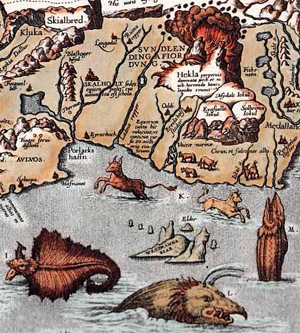
Dragons
It’s always good to work at the top of your intelligence and do research when you need to, but doesn’t ignorance spur creativity?

Doesn’t some of your best stuff come from trying to figure things out?

Explore what you don’t know, what you don’t understand and don’t be afraid to make things up.

Emotional complexity is interesting. Not knowing how you feel about something before you start is riskier, but also potentially richer.

At its best, creative stuff creates a map to uncharted territory – an attempt to describe ignorance. Whether its finding a new solution to a problem at work or painting a masterpiece, it’s at once totally new but it also makes complete sense.

Most people are scared of ignorance. Think about old maps, whenever there was an unexplored area of the map it would be labelled “here be dragons.” They just projected all the fear and anger and everything terrifying projected onto the unknown. That’s how people treat the unexplored territories in their own heads. Dragons are lurking around every corner.

It’s the artists job to brave the dragons and try and describe what is actually there. Instead of fearing your own ignorance, get excited every time you find one of these areas. Move boldly into it and explore.

That doesn’t mean what you’ll produce is scary, a comic strip like Calvin and Hobbes and Peanuts (at its height) faced the unknown as squarely as Death of a Salesman or Hamlet.

Ignorance may be bliss to some, but to us, it’s just potential genius!

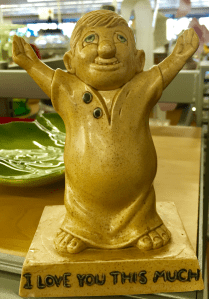
Love your ideas

Screen Shot 2017-08-05 at 9.06.15 AM

Do you love your ideas?

Sure, you love your good ideas and the ideas that make you money and the ideas that make you laugh, but do you love all your ideas?

Whatever that mysterious force inside us is that lets us connect things together in a way they never have been before, well, that force doesn’t know if an idea is good or not. It just pumps out idea after idea, spraying them all over the place in an endless geyser.

The only way to stop this force is to tell it it’s doing a bad job. To tell it that it’s not making sense and couldn’t it come up with something more useful?

It doesn’t even have to be you saying it, someone else telling you that your idea is stupid can do it. In fact, hearing someone else being told their idea is stupid can shut it off if you aren’t careful.

When that happens the geyser dries up and we find ourselves begging it to start back up again. We just need an idea, any idea, but all we get is a bunch of dust and nothing.

Here’s a way to get around that.

Love every idea you have for just a moment. No matter how silly, stupid or how many copyrights it breaks, just smile and enjoy your idea before you let it go.

I’m not saying that you have to pretend it’s a good idea, just that you enjoy it. Smile it at it. If it’s good, write it down or say it out loud. If it’s bad, just enjoy it like you would a bad movie or a child’s joke.

Every idea thinks it deserves to be enjoyed and loved.

In fact, why not go one step further than just enjoying the idea and actually add to the bad idea. If it occurs to you that the mechanical horses in front of grocery stores should be transformed into highway-ready ecologically friendly vehicles, don’t toss it aside as unworkable. Instead, start designing a way to hold all the rolls of quarters you’re going to need to get to work and back.

Let your ideas start to get connected, then you won’t have to release them. They become part of a web to build a better idea. Instead of throwing things away, you’re using them as a foundation for something else.

Appreciate, smile, enjoy and cherish every single idea you have. Just don’t act on all of them.

Do this and they’ll keep coming.

In fact, you’ll have so many ideas they might start to get irritating.

Not to you, but to all the jealous people around you who struggle to have any idea, even a bad one.

Ira Glass on the Motivation to Create

Ira Glass, host of This American Life on NPR, points out that most creative people start out trying to produce amazing things in a medium they love. They also start out with a high taste level. Their initial product does not live up to that high taste level, they know it’s not good. Most people never get past the point of producing things that don’t live up to their own judgement. How do you keep going until what you produce is actually good enough to please even you?

You can watch the whole series of Ira Glass on storytelling here.

Great video that will help you through difficult times.

Turning your commute into art

My buddy Gibson, designer of the Avenging Narwhal, has a history of interesting projects. Last Friday he sprang another one on us. I’ve talked before about the power of changing your commute, but Gibson managed to make his commute a creative act. He walked the 16 miles from his house to the office instead of driving. How does that change the experience of a commute? What details do you notice. Below is the email he sent me last Friday immediately after completing the event.

In My Day

Performance Art Project by Gibson Holub

Today I walked to work. 16 miles.

I left at 3:45 AM from my house in Seattle and headed up Hwy 99.

Screen Shot 2017-08-05 at 7.49.24 PM

The sky was clear. The moon was half empty. I was armed with pepper spray.

There aren’t many people out at 3:45 AM on a Friday, just a lot of cops and cabs.

I saw the first glow begin on the horizon at 4:30.

My feet started hurting at about 5.

I arrived at Accoutrements in Mukilteo at 8:42 AM.

So door to door, it took me 4 hours & 57 minutes.

That makes my walking speed 3.23 mph.

I went through 41 stop lights (or somewhere close to that, as I was a bit groggy).

Screen Shot 2017-08-05 at 7.50.23 PM.png

I wore a pedometer. When I arrived it read 32,308 steps.

I recorded the event with some photos. I took a picture of myself every 15 minutes or so.

I’m currently experiencing some serious discomfort in my legs.

I think I’ll pull the shoelaces out of my shoes and frame them.

Screen Shot 2017-08-05 at 7.51.05 PM

Artist’s Statement: The Search For Meaning

Why did I do it?

I did it because it was absurd. I did it because it was liberating. I did it because I knew it would be challenging.

I did it because I’m inspired by the unexpected, the unannounced and the completely unnecessary.

Is it art? Who knows, but I walked 16 miles to work today for no reason and it made me feel alive.

Screen Shot 2017-08-05 at 7.52.07 PM

More pictures here and here.

The vultures of mediocrity

Seth Godin, marketing smartypants and action figure, has a great post about how the world drives you to mediocrity. It’s very short, so I am reprinting most of it below. I do recommend you read his blog if you are at all interested in marketing yourself or your work.

There’s a myth that all you need to do is outline your vision and prove it’s right—then, quite suddenly, people will line up and support you.

In fact, the opposite is true. Remarkable visions and genuine insight are always met with resistance. And when you start to make progress, your efforts are met with even more resistance. Products, services, career paths… whatever it is, the forces for mediocrity will align to stop you, forgiving no errors and never backing down until it’s over.

If it were any other way, it would be easy. And if it were any other way, everyone would do it and your work would ultimately be devalued. The yin and yang are clear: without people pushing against your quest to do something worth talking about, it’s unlikely it would be worth the journey. Persist.

I wanted to add to it. Those forces are not just outside you acting on you. There is a drive inside ourselves to do things in a way that is “good enough.” Before you even start to worry about the world stopping you from being mediocre, you have to decide that you want to be better.

The difference between good enough and great isn’t always huge. It might just be a few extra seconds. It might be one more ingredient or one more draft that separates you from being extraordinary. If you want to be great, you have to convince yourself before you can convince anyone else.

Expect more than the mediocre. Stop settling for a C+ life, you deserve at least a solid B, don’t you? Just kidding! Shoot for the A+!

Trying for great and achieving mediocre half the time is much more satisfying than trying for average and achieving it every single time.

After you set your standards high, then prepare yourself for the forces in Seth’s post. The vultures of mediocrity are circling over every creative person, ready to rip into any good idea that dares to call attention to itself.

The simple reversal: creativity tip

I remember the first time I heard about reversing an idea as a conscious act. I was young, maybe 9 or 10, and my dad had kept me up late to watch Monty Python during a pledge drive on our local PBS station. The sketch that had just played was Hell’s Grannies, in which a grandma bicycle gang terrorizes the young people of a small town. They cut to the studio and some of Python was there, the announcer said that was his favorite Monty Python sketch. John Cleese dismissed it as “a simple reversal sketch” not worthy of praise. And I’ve found that in general comedians consider those types of jokes to be hacky and base.

However, since then, I’ve found reversing ideas to be a useful habit that can actually invigorate an old tired cliché. In fact, the way journalists describe interesting stories is a reversal. Dog bites man is not an interesting story, but man bites dog is an interesting story. It is also used as a humorous tool in Zen koans.

As an example of how this can work successfully, two of my favorite Coen brothers’ movies are based on brilliant using the opposite of the usual main character in a hackneyed plot and genre. The Big Lebowski is a film noir style detective film that stars, instead of the traditional tough guy war vet turned shamus, a war protesting hippie. Fargo is a police procedural that with a main character that isn’t a rule breaking tough guy, but a pregnant female cop that solves the crime by the book.

The next time your stuck or it feels like your just repeating an old idea, try reversing the idea or an element of it.  Many times this will take you down a new path and increase your interest in it.

Top yourself!

This is an extension of the last post, Don’t Save Your Best Ideas For Later.

Don’t be afraid to top yourself. Once you have successfully created something, your instinct will be to stay safe and only change the formula only slightly when you begin your next project.

Instead, why not top yourself every single time? Why not set your standard for each project so high that while you’re working on it you can’t possibly conceive of any way to improve upon it. Burn up the concept behind your work so totally that by the end it is curled up exhausted in the corner of your brain.

Of course, this way of working requires an act of faith on your part. It means every time you start work on something you are entering uncharted territory – traveling through the bits of ancient maps that said “here be dragons” or  “end of the world.” It requires you to trust that you don’t have a limited number of ideas and that you should parcel them out in tiny quantities in everything you do.

The phrase “Jumping the Shark” has made some people afraid to take chances this way. Inherent in its meaning is the idea that once a certain change is made, a concept or artist or actor or writer or series will never be good again. Truthfully, what kills most of these things is an extended lack of change that results in a gradual decline in quality and audience interest followed by a change forced from the outside onto an uninspired artist or team.

Instead of shark jumping, think about “Jump and a net will appear.” Take a chance that you might fail because you are unsure about where you’re heading next. The universe takes care of artists who jump off of creative cliffs without looking. Besides, if it doesn’t, you’ll land right next to another steep cliff you can jump off of and keep jumping until that net does appear.

Take the artistic champ of topping yourself every single time.

Jump and a net will appear.

Improvise your way to a better, faster first draft

One of the major schools of improvisational acting (improv) developed not as an exercise for actors, but as a tool to help creative writers develop new material and overcome blocks. Improv itself is really the art of trying to present the first draft of a play that’s so good it’s worthy of an audience. It doesn’t always work, quality wise, but with improv you always get something.

Without an audience, you have the ability to go back and perfect your draft until it’s fantastic. Instead of this making writers feel free to do whatever they want in their first draft, many people have difficulty even completing the first draft. It occurred to me that these rules might help writers free themselves up while writing.

Following these simple, basic rules of improv will get you a completed first draft and, over time, improve the quality of your first drafts of both fiction and non-fiction. There are great stories that break all these rules, so they really aren’t rules so much as suggestions. In my opinion, it’s better to break one of these rules in a second draft rather than the first.

1. “Yes, and…”

This is the most basic rule of improv. In fact, this is improv in two simple words. The idea behind these two words is that you always accept what came before and add something new.

In acting, the “yes” part of the phrase means not denying what someone else does or says. In terms of sitting and writing your draft, this means that as soon as something is down on the sheet of paper it is part of the story. There is no going back and switching around details because you got a better idea, it’s down in ink. I think more things were written this way before the word processor, but now it’s always easy to go back and change.

Now, let’s talk about the “and.” This addition to the phrase points to not repeating things over and over again. Each sentence should add something to the story or move it forward. So, you accept everything that has already happened and add something new. Each sentence should expand the world of the story or move it forward.

Taken together, they create an unstoppable force creating a world and telling a story.

2. C.R.O.W.

This is an acronym for the most basic parts of a story that needs to be established fairly quickly for a reader to want to continue with the story. They stand for character, relationship, objective and where. Withholding one of these pieces of information too long results in a twilight zone story where everything is just killing time until a last-minute piece of information changes everything that happened before. You’re much better off giving your reader this information and letting the story follow its natural path. It belongs at the beginning of the story.

Withholding this information will make your audience lose patience with you.

3. Start in the middle of the action.

Try to start with characters that already know one another involved in an action. Starting with a couple leaving a dry cleaner with a stolen wedding dress and tuxedo being chased by the shop owner is far better than starting with two characters who have never met sitting on a bench. Strangers need to introduce themselves and have no emotional connections, which means more work for you and more patience from your readers.

4. Listen

I know, you’re not listening, you’re writing. So, really this one should be “read yourself carefully.” Everything you need to tell your story is right there. Often, people don’t figure out what they’re writing about until later drafts. Reading as you write will allow that process to speed up.

Also, have your characters listen to one another and really respond to what’s said to them.

5. Details

Be as specific as possible in your details. If a character is reading, he isn’t reading a book, he’s reading Bridges of Madison County or Highlights Magazine or a copy of the Constitution. Every detail is important. Training yourself to be as specific as possible in your first draft will charge what you write with meaning.

6. Justify

There are no mistakes, justify what you write. If there is confusion or contradiction explain it. Repeated mistakes are a theme! However nonsensical something is in your story, make it natural and real. Justify justify justify. If it truly doesn’t belong, cut it out in the second draft.

7. Change

Some of the worst improv scenes are when all the actors refuse to let their characters change. Story is change, if nothing changes there is no story. Don’t love your characters so much that it becomes like bad fan fiction where the familiar character run through familiar situations and say familiar things and leave ready for the next adventure with no emotional impact at all.

8. The end is in the beginning

Don’t pull in some outside force, deux ex machina, to end your story. Look at what initiated the story and find the solution there. Walk backward into the future figuring out where to go next by examining what has happened before. If a story starts with someone cleaning a gun, someone will probably be shot in the end. If a story begins with a farm boy who wants to be a hero, it will end with that boy either becoming a hero or not becoming a hero.
John Cleese on how to get out of a creative rut

John Cleese on overcoming a creative rut. This applies to writer’s block or any other time you need to figure out a problem and just aren’t motivated.

I knew a wonderful teacher once—a tutor. He tutored my stepsons and my elder daughter. He said to me, “Always start where the energy is.”

People make an awful mistake by starting where the energy isn’t. If you’re feeling very world-weary—and sometimes we’re all in that boat—you have to sit down with something that’s going to engage you. That doesn’t mean you just switch on the TV and watch a cartoon, but it does mean asking, What would be fun? Maybe take a piece of paper and a pencil and start drawing silly things. Go for a walk. Just sit very quietly watching your breathing. Anything. Just allow the whim to get you going.

Now, you can’t do this all of the time; it’s too disconnected. But I think in that particular frame of mind, when you run out of energy and motivation, I think you have to go right down to the instinct, right down to a whim.

I’m coming up on 60, and I’m wondering where my life will begin to go. I need to take a slightly different direction. I talked to a very wise man, and he said, “If you’re trying to find a new direction, don’t plan it, because this [pointing to his head] has been planning your life up to now. You can’t plan something new with the same old apparatus.” He said, “Leave a gap. Leave a space, and just do things on auto for a while. Just see where these whims take you.”

It’s like creativity. You have to follow it without knowing where you’re going. If you try to control where you’re going, you’re back in the same process. It’s like asking a piece of machinery that’s broken to mend itself.

Meaning, Metaphor and Magic

I posted before about making a magic object to help you with your creativity and work, but today I was thinking about all the magic in the objects already around us. Not every object has the same amount of magic, but you know the ones that are meaningful to you. Maybe it’s something an old friend gave you to remember them by or a trophy of a great success in your life or a picture of you with a famous person. You know the kinds of things I’m talking about. Generally they have a low dollar value, but you’d miss them the most if they were gone.

What if these things had real Harry-Potter-Lord -of-the-Rings magic powers? That handkerchief you took from your grandmother’s house the day she died. Would it have healing powers? Would it protect you from demons? Would it make cookies appear whenever you wanted one?

The connection between the magic of these items and their powers is the root of the energy of metaphor that powers everything you create. Their meaning is part of you and examining them is like being able to look at yourself from the outside.

So, find that cigar box of mementos you keep or dust off your nick knack shelf and go through them one by one. Hold them in your hand and ask yourself what spell it would cast if it could? What power does it contain?

This is the raw force of creativity at work, the discovery of connections between seemingly disconnected objects and yourself. You’ll get a better understanding of your needs and wants and emotional underpinnings.

What do you keep? What does it mean?

In fact, why limit it to what you own? Look at other objects in the world and ask what magic powers they would have. A pair of Houdini’s handcuffs or a handwritten page from one of Shakespeare’s plays or a piece of the Berlin wall?  It all has power inside and recognizing it will allow you to control it.

Plus it’s fun. So, even if you get nothing from it, you’ll have a good time. Oh, and they don’t really have magic powers, so don’t get any bright ideas that your grandfather’s walking cane can really make you invisible. It’s just that your grandfather made you feel invisible when you were around him because he was such a powerful man. You can’t walk around naked in public just because you’re holding a cane.