“Nonsense and beauty have close connections.”
– EM Forester
Have you noticed that a lot of people who write about creativity also try to justify it with practical uses like problem solving or making money? As if creativity were the intended end product of a controllable series of actions. In fact, there are misguided “rules” for creative meetings in offices to keep them on track. Arts programs are discontinued in schools all the time as a waste of time that won’t help you on standardized tests. Even as we recognize the power and importance of creativity, we negate the actual work of it.
And by work I mean play.
I want to argue for the pointless, the nonsense, the impractical and the absolutely useless. It is only through these that we reach a point where we might, at some point, come up with something beautiful or original or world enhancing. The road to a good idea is littered with thousands of terrible ideas. And by terrible ideas, I mean fun and interesting ideas that aren’t what you need at just that moment.
In fact, we’re taught to hide the “bad” ideas. The impractical ideas. The nonsense. To only give the ideas that we know are winners and practical solutions. These leads to boring people, afraid of change, waiting for someone else to say something stupid so they can laugh at it and feel superior.
Take some time to do something pointless and fun. Express yourself in ways that you aren’t good at. Write a dirty limerick, draw, play a practical joke, write a romantic comedy or, in my case, dance. Have fun failing and you can learn to love nonsense and pointlessness. You can recognize that nonsense is sometimes the only visible part of a greater truth. That pointlessness can sometimes be a signpost to something more important.
But, I’m not going to promise anything except a good time. Play is the hard work of a good idea that seems to come in an instant. Make sure you do something every single day that makes the judgmental authority figure in your head roll his/her eyes and question your sanity. You’ll never be able to prove that any of it had any worth to you, but it won’t matter. Pointlessness is its own reward.
He was the lead singer of a band called Guided By Voices and is one of the most prolific songwriters of all time. Over 2,000 of his songs have been commercially released and he has a backlog that will probably still be trickling out long after he retires from music.
How does he do it? He’s incredibly talented, for one thing, but there are also interesting things he does that we can mimic. I watched a documentary on him and I noticed that instead of starting with a song and then trying to find a place for it, he sometimes works backwards. He is constantly looking for song titles all around him. Interesting intersections of words that out of context could make for a poetic song, album title or band name. Then, he designs album covers with track listings for these imaginary groups. He has boxes of them in his house.
It got me thinking. Wouldn’t that work for anything creative?
Couldn’t you design book covers and movie posters and then make the movie they inspire? Why not write a blurb for the back cover or your own review? In fact, you can design a whole marketing campaign to help you focus and make it more real. What is the name of your gallery show? What would the commercial for it look like? What would you say when David Letterman asked you about it?
I’m betting a lot of musicians spent their high school years designing fliers and album covers for bands that hadn’t written a single song. Actors spend time imagining an acceptance speech for an academy award. Sometimes it’s the unimportant stuff that drives us toward the meat of creativity.
A friend of mine pointed out a cool way to make up your own band and album. (Although with slight modifications, this could give you a book title and chapters.)
You may have read about it in Vanity Fair. In the early 80s, a group of boys in Southern Mississippi decided they were going to remake Raiders of the Lost Ark shot by shot using a video camera, their friends and whatever props and locations they could scrounge together. It took them seven years to complete. Seven years is a long time to work on something as an adult, but to a 10 and 11-year-old, that’s a lifetime.
I was lucky enough to attend a screening hosted by the director a while ago. The quality of the film is as rough as you would imagine a 20-year-old video tape to be. Despite technical flaws, this movie is a powerful testament to what it means to be a creative nerd. If you have ever wondered why people get obsessed with movies or TV shows to the point of distraction, this movie has the answer. Children from divorced families getting together to create their own fantasy world every summer while people made fun of them.
Technically, the movie has every fault you would imagine. But, those faults pale in comparison to how much they got so very very right. The giant boulder is a giant boulder, the fire in the bar scene is a fire in a bar (admittedly, a bar they built in someone’s cellar) and when Indiana goes under a truck while holding onto his whip and is then dragged behind in the dust, you find yourself cheering in excitement that they pulled it off.
One of the great pleasures of the movie is watching them solve problems that don’t occur to the casual viewer. You wonder how they’ll do the boulder, what the ark will look like and how they’ll pull off the chase scene. The real interest is in the tiny moments. For instance, if you are in a small town in Mississippi, where are you going to get a monkey? When the solution appears on-screen, I found myself laughing not so much because it was funny, but because the solution is so clever.
They just used a Beagle mutt named Snickers.
When Marion is trying to get the monkey off of her shoulder, it’s just a dog trying to figure out why a girl is shaking him around. Snickers rides around on the shoulder of “the Arab” with a look of disinterest and whenever he gets put down, he immediately curls up and goes to sleep. The shot of him on the floor after eating bad dates is just him sleeping in an odd position.
The plane at the end of the first scene is replaced with a boat in a swamp. The natives that chase him there are 11-year-old boys in grass skirts. Time after time they just pull it off in an obvious but tremendously clever way.
In the question and answer after the movie, someone actually had the audacity to point out what scenes and shots were missed. For a split second, I thought the audience, all awestruck at the work and creativity on display, was going to collectively hit him in the back of the head. Chris Stromopolis, the co-director and Indiana Jones, shushed the crowd and started to explain. You see, he said, for the first few years, we could only see the movie at the theater. There were no video stores and it wasn’t on TV. They worked from memory and a Marvel Comic adaptation. It wasn’t until 84 or 85 that they actually could compare what they’d filmed to the actual movie. At one point, they went into the theater with a tape recorder taped to their chests in the hopes of being able to get something, ANYTHING, that they could use. The first time, they were caught. The second time, they got a good tape with dialog.
The most touching moment for me was Chris telling us that scene where Marion kisses Indy in the ship’s cabin is his actual first kiss from a girl and it was captured on film. Which makes me think that what started as an attempt to duplicate an action adventure movie turned, as the years passed, into an elaborate plot to get a kiss from a girl.
In the blooper reel there’s a shot of a kid that they set on fire with gasoline rolling around on the floor asking if they got the shot while someone is standing off to the side trying to quickly read the instructions on a fire extinguisher.
When they tried to make a plaster cast of the kid who played the Nazi Toht’s head for the melting scene at the end. You know, the weird-looking torture Nazi whose face melts, well in this version he’s played by a kid who looks like Ernie from My Three Sons only skinnier and nerdier. Turns out they accidentally used construction plaster instead of plain plaster, so when they put it on his head, it started to heat up to about 107 degrees. They had given him a pad of paper to write on and he wrote the word “hot.” Then, they realized that they hadn’t properly soaped his eyes and they were plastered shut. He reached for the pad again and wrote the word “hospital.” They called an ambulance, but the police got there first. The policeman looked at the plaster coated boy, shook his head and said, “What in the hell are you kids doing?”
One store owner called the police and told them that they were filming child pornography.
Chris is now trying to turn all this attention into a career of some kind. He’s been in LA for 14 years with no luck, but they might be the thing that pushes him over the edge. Their story has been sold and is going to be a movie and a documentary. Hopefully, by the grace of Lucas, this will be released on DVD so every nerd in the world can see it.
In the credits, the movie is dedicated to the memory of Snickers. He was hit by a car before the movie was complete. When an audience member asked about Snickers, Chris almost teared up and said, “Good old Snicks.”
It’s like watching someone’s home movies, but the sheer scope and magnitude of what they pulled off makes me feel like I can do anything. The biggest lesson in all of this is that if they had only half-made the movie, it wouldn’t be that interesting. Remember to finish things no matter what!
Just search for Raiders! The Story of the Greatest Fan Film Ever Made and you can watch it on Netflix.
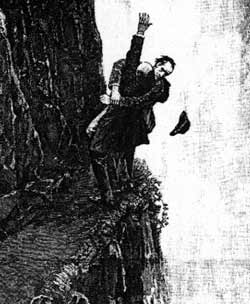
Tesla had his Edison, Holmes had his Moriarty and Spielberg has his Lucas. Having a rival or arch-nemesis can really drive your creativity to new heights.
There are two kinds of creative competitions. The first, a rivalry, is the healthier of the two. With a rivalry you find someone whose work you admire and try to top them. Paul McCartney has said that listening to the Beach Boys’ Pet Sounds drove them to create Sgt. Pepper’s which consistently shows up on critic’s lists as the best album of all time. Usually with Pet Sounds at number two. The members of Monty Python talk about how they respected the comedic taste of the other group members so much that it drove them write more and better sketches to top everyone else at table reads.
For this kind of rivalry to work you need to find a living person who is around your age and produces work you admire and aspire to. If it is someone you know, it makes it even better because you’ll have someone whose opinion you respect to bounce your ideas off of. Pick something of theirs that you admire and create something better. Top them. If you can’t, throw it away and try again.
The second type of challenger is an arch-nemesis. This can be more dangerous and more fruitful. It involves picking someone you don’t like who is successful and using them to define yourself. By picking someone who has qualities you don’t like or respect, you are forced to define what you are. Also, watching them succeed will eat on you and drive you try even harder. This is where the danger comes in.
Tesla and Edison hated one another to illogical distraction. Brian Wilson of the Beach Boys hallucinated that Paul McCartney and Phil Spector were out to get him.
One of my favorite recent arch-nemesis confrontations was between Larry the Cable Guy and David Cross. Larry is a “low brow” comedian who has lots of jokes about bodily wast and David Cross is an independent comedian given to long rants about George Bush. Cross made an offhand comment about Larry in Rolling Stone that led Larry to devote a chapter in his book to Cross. Then, Cross wrote an 11 page rebuttal, manifesto, clarification on his website. Not only is this response incredibly funny, it also is a great clarification of what Cross believes and who he is. That is useful information for anyone to have about themselves.
So, if you want to produce smarter, more creative, more vibrant work, consider a rivalry or arch-nemesis. The constant challenge of having to create better work will drive you to new heights!
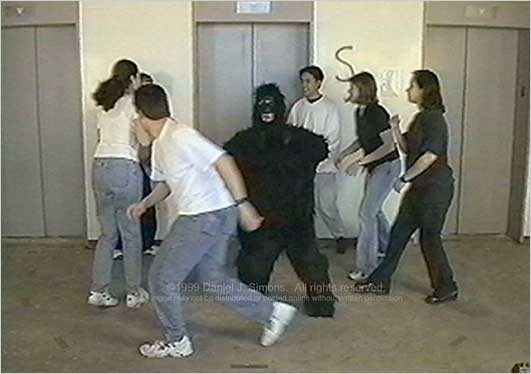
Inattentional Blindness got a lot of media attention last year. It’s the idea that if we lack an internal frame of reference for something it is more than just confusing, our brain actually refuses to even see it. In other words, if you aren’t expecting to see something, you literally won’t see it even if it’s right in front of you.
In the original experiment, people were shown a video of people passing a basketball back and forth and told to count the number of passes. In the middle of the video, a person in a gorilla costume stepped to the middle of the screen faced the camera and then left. After watching the video, the participants were asked if they saw anything unusual and 50%(!!!) of the people did not report the gorilla!
Think about that, half the people didn’t notice a person in a gorilla suit. Everyone I’ve talked to about this says that, of course, they would have seen the gorilla. But, aren’t there obvious things we all miss all the time?
Sometimes, an idea or solution is standing right in front of you, but no one is seeing it. What if you, when faced with a problem, train yourself to look for the gorilla.
If everyone is focussed on the top of a problem, look at the bottom. Look for the gorilla! In fact, if everyone could see the gorilla, you wouldn’t need to be there.
If you know there’s a gorilla wandering around and you can’t see it, call someone else in to look for it. Remember half the people couldn’t see it in the experiment, finding someone with a different perspective might make it more visible.
Isn’t a new idea just a gorilla that no one has seen before?
One way of describing creativity is finding new connections between previously unconnected thoughts and ideas. Of course describing it this way doesn’t take into account the importance of choosing the ideas you want to connect.
Here’s a cool way to get some inspiration for connections, random pictures.
Here are a few sources for random pictures:
Flickr’s latest photo page: The latest pictures taken by people around the world. (For random pictures from the whole database, click here. They’re displayed like a three panel cartoon.)
Latest live journal pictures: Pictures from public live journal posts as they are uploaded. Click on the picture to see the journal entry it’s from.
People doing stuff: Hit the button and this cool site finds a random proper noun doing a random verb. (Like “Scott whistles” or “Carl begs”.)
Be careful with all these sites, occasionally work inappropriate images will come up.
You can use them in lots of ways, either to pick and choose what you find useful or to run the first two pictures together. Or if you have a problem in mind, just connect it up to pictures until you get a solution.
Plus, it’s really fun to see what other people are up to!
This may seem like a silly tip, but I swear it works.
Give yourself a secret nickname. This is going to be like your super-hero identity for creativity. For instance, perhaps you could call yourself “Genius Pants.” Now, when you need an idea fast or you start to get stuck, just say to yourself, “What now, Genius Pants?”
Once you do this, it activates a whole other part of yourself. The part of you that is energetic and eager to please. The part that is brimming with ideas! Great ideas!
Then, after you’re finished, just say, “Thanks Genius Pants, you are awesome.”
The first step is to choose your nickname. I recommend having more than one word in your nickname. The first word can either be a positive adjective, like “genius” or “amazing,” or a title of some kind, like “princess” or “mister.” Then, the second word can be any noun or another positive adjective.
It can also be fun to add a “Mc” to the front of the second word.
I came across a quote from Flannery O’Connor that inspired this post. She said, “The writer should never be ashamed of staring. There is nothing that does not require his attention.”
I don’t think this applies to just writers, but creative people in general. It’s only through close examination that you can get past the surface and figure our what’s really going on inside of anything. This sometimes requires us to look at someone a little bit too long or to pay too much attention to a conversation at the table next to us. We might ask our friends questions that seem too probing or they catch us going through the mail they left out on the table.
Society might judge us rude, but this observation is crucial.
Don’t be ashamed of noticing the world around you. Stare, listen and ask questions. Sometimes you’ll get caught and confronted, but this won’t happen often. Don’t give it a second thought. Drink in the world in loud, gigantic gulps.
Stare proudly. The information you take in is the fuel for what you produce.
I’ve been reading about Nikola Tesla for the last couple of days. Tesla was a brilliant inventor that had flashes of insight so intense that plans for his inventions appeared whole in his head at once in every detail. Tesla and Thomas Edison were bitter enemies and I came across a Tesla quote that helps to define the difference between them.
Edison famously said, “Genius is one percent inspiration and ninety-nine percent perspiration.”
Tesla’s response, recalling the time he spent working for Edison, was, “If Edison had a needle to find in a haystack, he would proceed at once with the diligence of the bee to examine straw after straw until he found the object of his search. I was a sorry witness of such doings, knowing that a little theory and calculation would have saved him ninety percent of his labor.”
Edison was of his age, approaching the problems of the world as a laborer. Tesla was more of our age, creating ideas easily and watching them spread… or not.
Here’s another quote of Tesla’s, “The practical success of an idea, irrespective of its inherent merit, is dependent on the attitude of the contemporaries. If timely it is quickly adopted; if not, it is apt to fare like a sprout lured out of the ground by warm sunshine, only to be injured and retarded in its growth by the succeeding frost.”
Edison understood what people wanted and worked on that. Tesla was a fountain of ideas, but he had no idea what people would accept.
Another interesting distinction in creativity and marketing.
The Twin City Daily Planet posted an article by Michael Fallon, one of their critics, called How creativity is killing the culture. In it, he suggests that encouraging everyone to be creative has resulted in “a nation of navel-gazing dreamy-eyed so-called creatives who no longer
consider it worthwhile to roll up their sleeves and get down to hard
work to get a job done, or, even worse, who no longer deem it worth
their time to bother checking out any of the stuff that anyone else has
made.”
Obviously part of the point of the article is to start discussion (flamebait) more than I think he’s really serious. In truth, it seems like he’s burned out with his job and is tired of going to gallery shows by bad artists.
The meat of his argument is that people shouldn’t show bad art to an audience. Two hundred years ago, most of the creativity you would come in contact with was probably pretty bad. The art you would see and the music you heard was produced by local artists. Only the great art survived, so it seems as if they were better than now. Then, when performances could be recorded and art more easily distributed, there was a time when a very select group of editors and writers decided what was good and what should be seen. Now, the role of the critic is being diminished in value and that probably hurts if you’re a critic.
Today, you have access to music and movies that would never have made it to mass distribution even twenty years ago. Is there a lot of bad stuff? Of course. I haven’t seen an increase in the number of bad gallery shows here in Seattle, but the competition has increased.
I agree with him that I see a trend amongst creative types to not pay attention to what is being created by others. Great writers read, great chefs eat at other restaurants, great musicians listen to music, if you aren’t an avid consumer of something, why would assume that you would be able to create it?
But, I say if you get pleasure from creating, by all means create – just don’t assume you’re producing something of interest to others. If you do want to share it, be prepared to be ignored. Even if you produce something great, be prepared to be ignored or dismissed. So has it been, so shall it be.
The rush to creativity has increased the amount of art produced, but I don’t think the percentages of good to bad art has changed. There is more good art, there is more bad art. That means critics have a numerically larger number of artists trying to get reviewed and a larger number of bad artists.
I’m going to include one more paragraph that to me seems to describe the way the world has always been. There was no magical time of fantastic art in the past. It has always been extremely easy to create something and extremely difficult to create something great.
From my vantage point, the zero-sum creativity spiral has some
strangely counterintuitive and dreadfully harmful results. Most
worrisome among these is the fact that the constant lip service to
creativity leads to the creation of more and more stuff—art and music
and writing and the like—that is actually not very creative,
uninteresting, of poor quality, and off-putting to any potential
audience. This may seem an impossible thing to stem from such a
feel-good sentiment—more creativity must mean a better world,
right?—but the problem is that more emphasis on creativity means less
emphasis on what it is precisely that makes art good. It’s not the
simple act of making—of creating something, anything—that makes art.
It’s the application of craft, dedicated practice, careful thought,
hard work, and artfulness that makes art. Real creative art is a rare
and precious thing and this will likely always be so.
I guess, to him, it would be better to discourage creativity. That way, he would have far fewer artists to deal with.
 I’ve been reading about
  Creative Creativity